The wrong frame
"My child won't focus on homework when there's an iPad in the house." That framing positions screens as the obstacle and your willpower (or your child's) as the solution. It rarely works because willpower is finite and screens are designed to be addictive.
The right frame: structure beats motivation
Replace willpower with structure. The structure that consistently works in our reviews + parent interview data:
- A fixed homework start time, every weekday. Not "after dinner" — a specific clock time, written on the fridge. The brain habituates faster to clock cues than to event cues.
- A fixed homework location, screen-free. Not the bedroom; not the dining table where someone is also watching TV. A consistent third place — usually a desk in the living room within sightline of a parent.
- Screens off in the entire room during homework time. Not "screens off for the child but parents on phone." The brain treats peripheral attention as available; visible screens nearby are themselves the distraction.
- A fixed end time. 45 minutes for Class 3, 60 minutes for Class 5, 90 minutes for Class 7. Whatever is not done is not done. The screen + play happens after; never instead of.
Why "no screens till homework is done" usually fails
It makes screens the reward and homework the cost. Children optimise to minimise the cost (rush, sloppy, get-it-over-with) and maximise the reward. Better: separate the two — homework is its own slot, screens are their own slot, neither is conditional on the other.
The exception
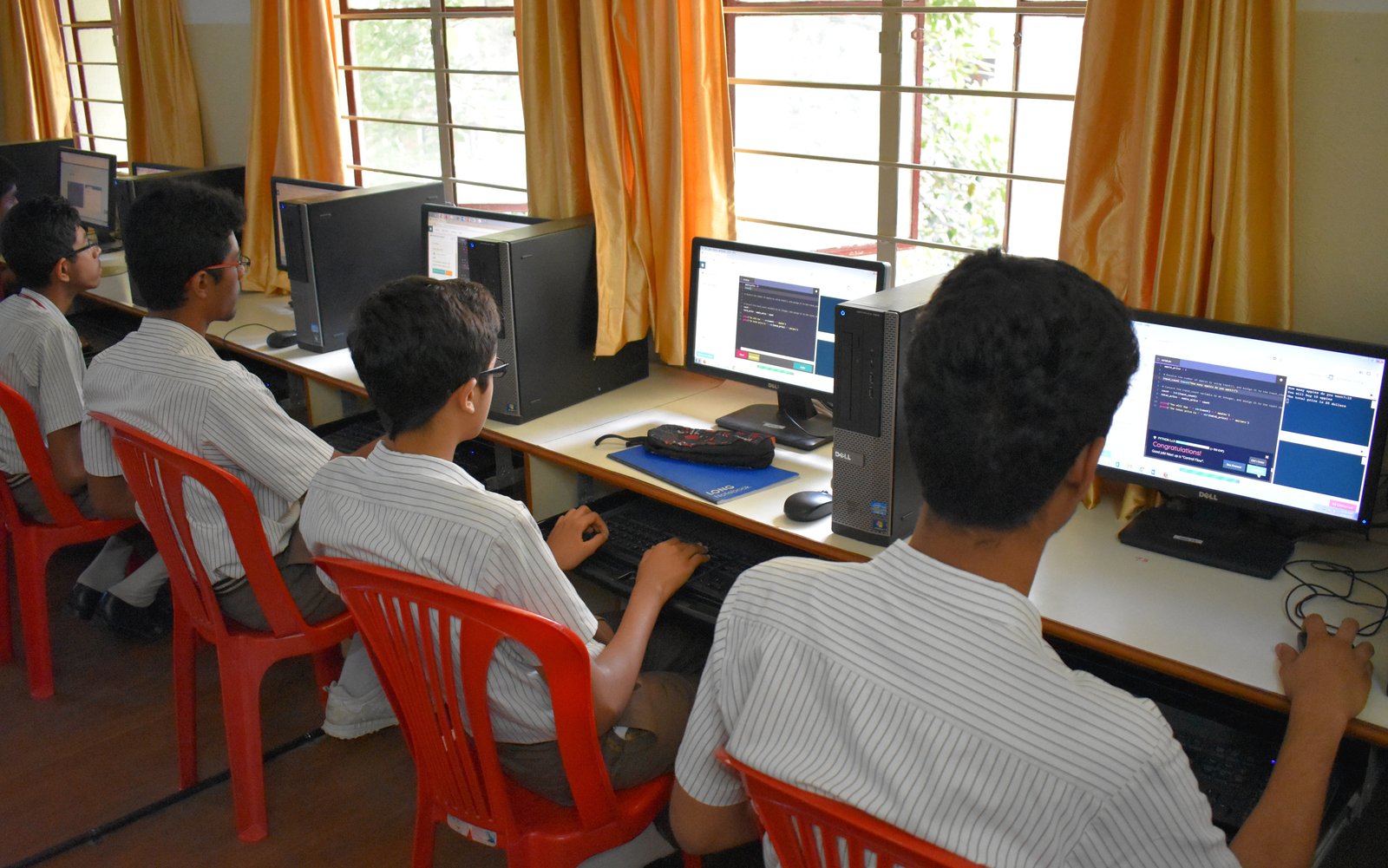
For middle-school children with research projects, screens are part of the homework. The structure shifts: a fixed homework slot during which the screen is allowed but only on the project, with the home-screen swiped to a research-only view. Browser tabs that are not project-related get closed. The parent walks past the desk every 10-15 minutes — not to police, but to be visible.
What to drop
- Homework apps that gamify performance. Most don't survive 4 weeks of use; the novelty effect collapses.
- Bargaining about homework difficulty. "If you finish maths in 20 minutes, you get extra screen time" is the same trap as the screens-as-reward setup.
- Doing the homework alongside the child. Useful for Class 1-2; counter-productive from Class 4 onward. The child needs to develop the muscle of focusing alone.
One reframe
The goal is not to "get homework done." It is to build a child who, by Class 7, can self-manage a 60-minute focused work block. The homework itself is the practice ground. If the structure consistently delivers on that, the homework outcome follows automatically.